Keynote
A focused 45–60 minute talk for faculty, school leaders, students or parents — designed to make the issue understandable and give the room a clear next step.
Create the spark
Jay Jaboneta / Education & Leadership
Education · Leadership · AI FluencyMy education work has moved through different forms — removing barriers to school through the Yellow Boat of Hope, helping build innovation platforms inside universities, developing leaders through the HOPE framework, and now helping educators and institutions build practical AI fluency through Kenzo AI.
The thread is the same: give people access, capability, and enough confidence to act.
My education work today · Kenzo AI
Most of my education work now runs through Kenzo AI. The question is no longer whether educators have heard of AI. It's whether they can use it well, evaluate it critically, teach alongside it responsibly — and whether their school can turn that into a shared, responsible, repeatable and measurable capability rather than a few enthusiastic early adopters.
That means moving past generic tool demos toward clear frameworks, hands-on practice, role-specific workflows, responsible-use guardrails and institutional leadership.
The goal is not to make teachers dependent on AI. It's to make them more capable of deciding when AI helps, when it doesn't, and what still belongs to the human being in the room.
Kenzo AI works with schools, companies, NGOs and institutions across the Philippines and Singapore, with programs built around real work rather than technology theater.
Organizational AI Fluency →Leadership framework
HOPE was born from my work in Yellow Boat, building university incubators and innovation labs, and the book Start with HOPE. It's deliberately simple: leadership begins with what you already have, moves through action, and becomes durable only when other people become capable too.
Available now
A Social Entrepreneur's Guide to Building What Matters — the HOPE framework and the lessons behind it, for people who want to turn compassion into action and ideas into work that lasts.
startwithhopebook.com →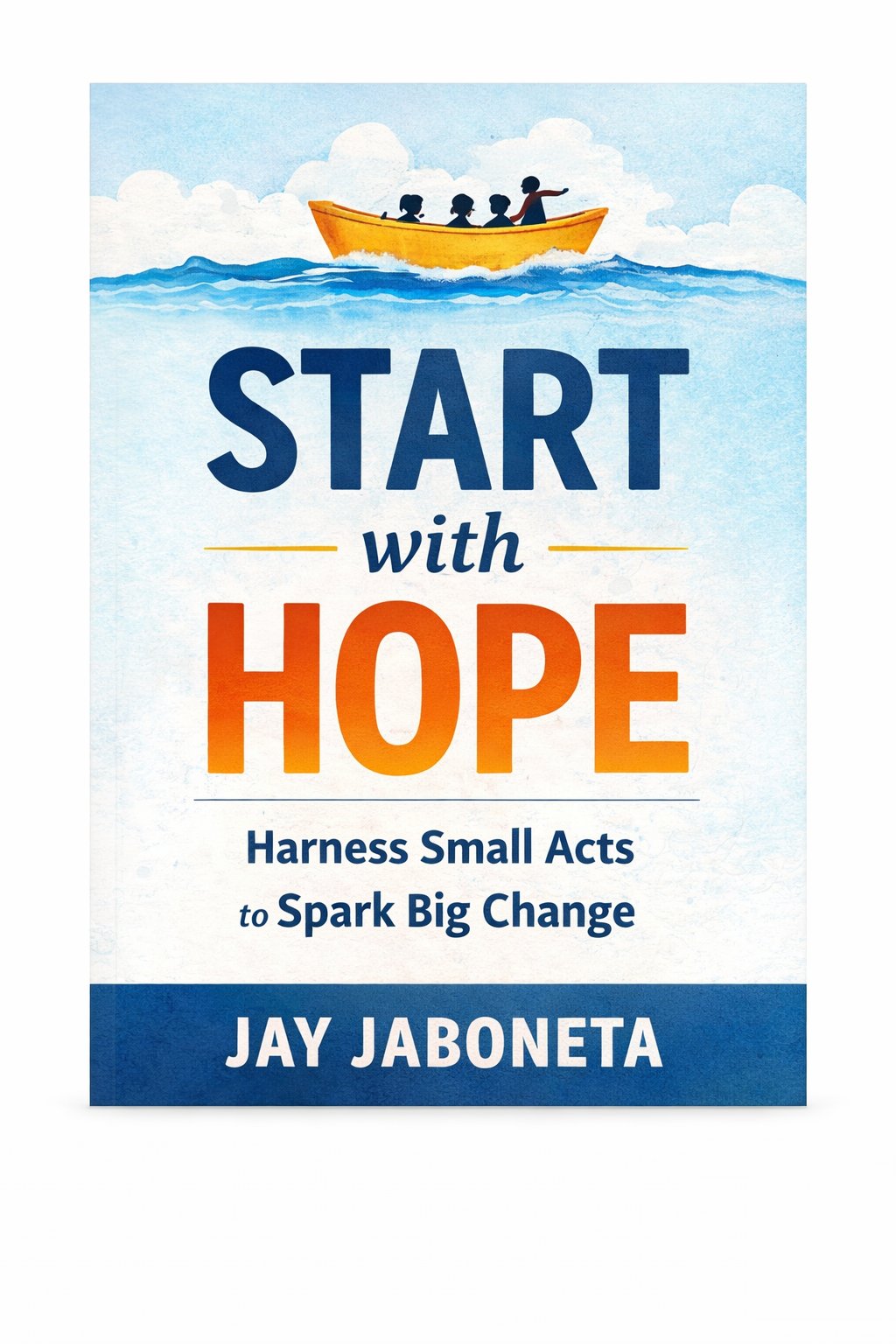
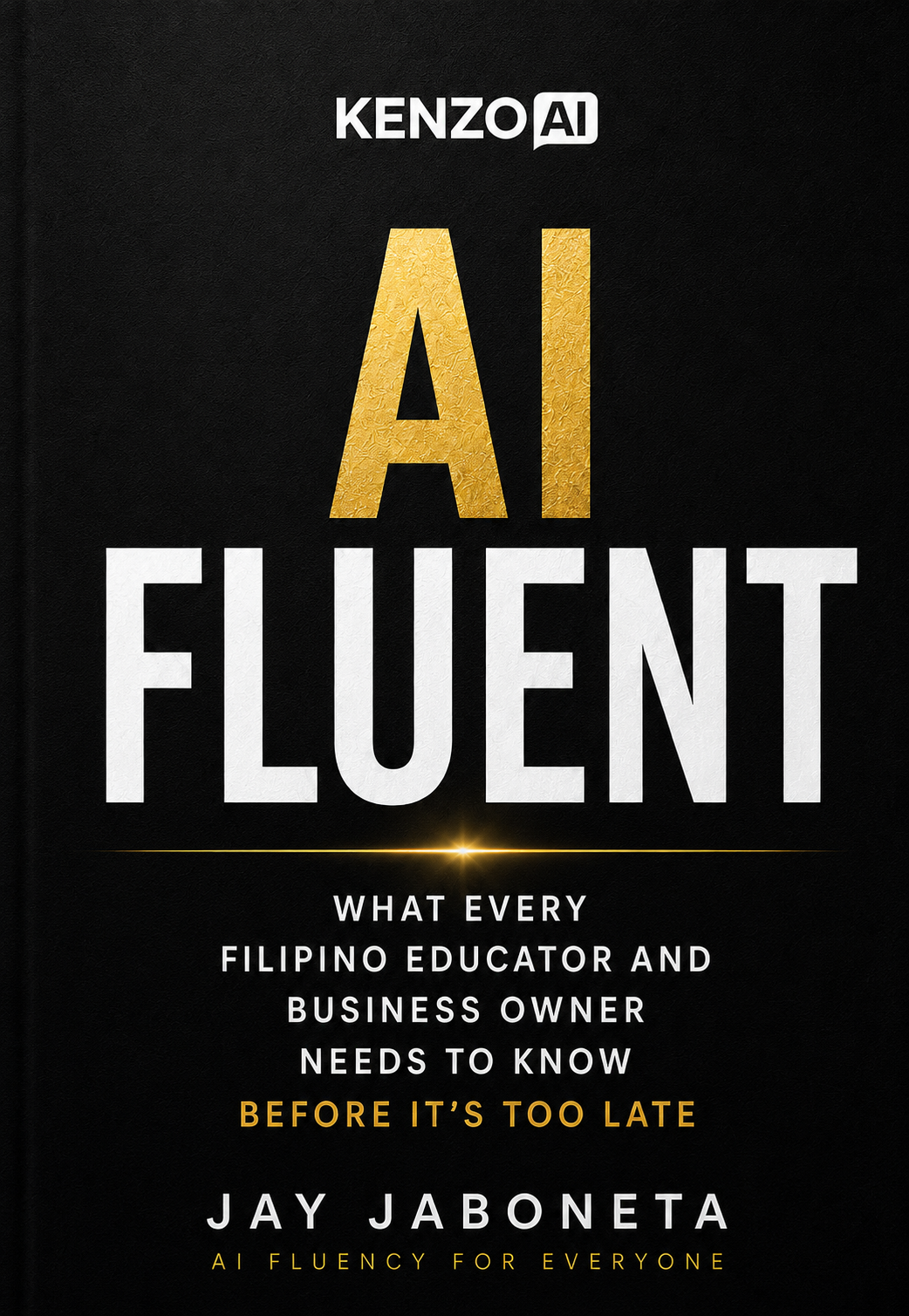
Forthcoming 2026 · The book behind the practice
What Every Filipino Educator and Business Owner Needs to Know Before It's Too Late
A plain-language guide to becoming genuinely fluent with AI, written for Filipino classrooms and Filipino businesses rather than Silicon Valley ones. It extends the principle behind the education work on this page: people don't need more hype. They need language, frameworks, practice, discernment and a clear place to begin.
Read more about AI Fluent →The journey
Building practical AI fluency programs for educators, schools, NGOs and companies — moving from awareness and isolated prompting toward role-specific workflows, responsible use, institutional guardrails and internal leadership.
Managed and led innovation-lab programming that connected students to entrepreneurship, social innovation, mentors and real-world projects beyond the classroom.
Supported social-innovation pathway and resource-generation work, helping strengthen a platform where innovation and inclusion belonged in the same conversation.
Co-founded a national education-access movement serving more than 200 communities through school boats, classrooms, bridges and other interventions that remove the barriers between children and the chance to learn.
Ways we work with schools
Schools don't all need the same starting point. Some need a conversation. Some need faculty practice. Some need policy. Some need a longer path to institution-wide adoption.
A focused 45–60 minute talk for faculty, school leaders, students or parents — designed to make the issue understandable and give the room a clear next step.
Create the spark
Hands-on sessions using real teaching and administrative work, so participants leave with practices they can apply immediately.
Build working capability
Multi-session capability building that develops confidence, role-specific workflows, internal champions and follow-up mechanisms.
Move from spark to system
Ongoing support on responsible AI use, governance, leadership readiness, policy, adoption sequencing, and what the institution should build next.
Keep the system learning
Schools that want the capability recognised formally can follow the Kenzo AI certification ladder — individual credentials for teachers that, once enough of a faculty holds them, unlock institutional certification. See the ladder →
Common questions
No. The programs are built for classroom teachers and school administrators, not for developers. Sessions use the participants' own lesson planning, administration and communication work, so the starting point is the job people already do rather than the technology.
Academic integrity is treated as a design question rather than a policing problem. Faculty work through where AI use is appropriate, where it should be disclosed, where human judgment must remain, and how assessment can be redesigned so that it still measures what the school intends to measure.
Guardrails are part of the work, not an afterthought. Schools define what may be used with AI tools, what requires human review before it reaches a student or parent, and what data should never be entered into a public tool at all.
No. The aim is to make educators more capable of deciding when AI helps, when it does not, and what still belongs to the human being in the room. A teacher who can judge an AI output well is more valuable than one who avoids the tools entirely, and more valuable than one who accepts whatever the tool produces.
Education & leadership
If you're planning a faculty development program, a school AI initiative, a leadership session, a keynote or an institution-wide adoption effort, we can start by defining the capability you want to create.